
Food Ingredient Insights & News

Explore technical formulation guides, market trends, and industry articles curated by NCC Food Ingredients specialists.

0%

Beverage Processing Ingredients help turn a basic drink into a product that tastes consistent, looks appealing, and stays stable during storage. They can include sweeteners, acids, stabilizers, emulsifiers, preservatives, colors, and flavorings. Each serves a specific purpose. For example, an acid may brighten a fruit drink, while a stabilizer can help keep pulp evenly distributed instead of settling at the bottom.

Their importance becomes clear on a production line. A beverage may pass through mixing, heating, filling, and transport before reaching a store shelf. Small changes in ingredient levels can affect its flavor, texture, clarity, or shelf life. Processing teams select ingredients based on the drink’s recipe, equipment, packaging, and intended storage conditions. They also test batches for consistent results. Details matter.

Still, no ingredient can fix every formulation problem. Too much stabilizer may make a drink feel thick, and an unsuitable flavor can overpower the fruit. Ingredient choices should therefore be guided by technical data, supplier specifications, and careful trials—not by trend alone. Manufacturers should also check that each ingredient is appropriate for their product and market. This takes time. Even experienced teams may need to revise a recipe after tasting and stability tests. Understanding Beverage Processing Ingredients offers a practical starting point for making informed decisions about quality, performance, and consumer experience.
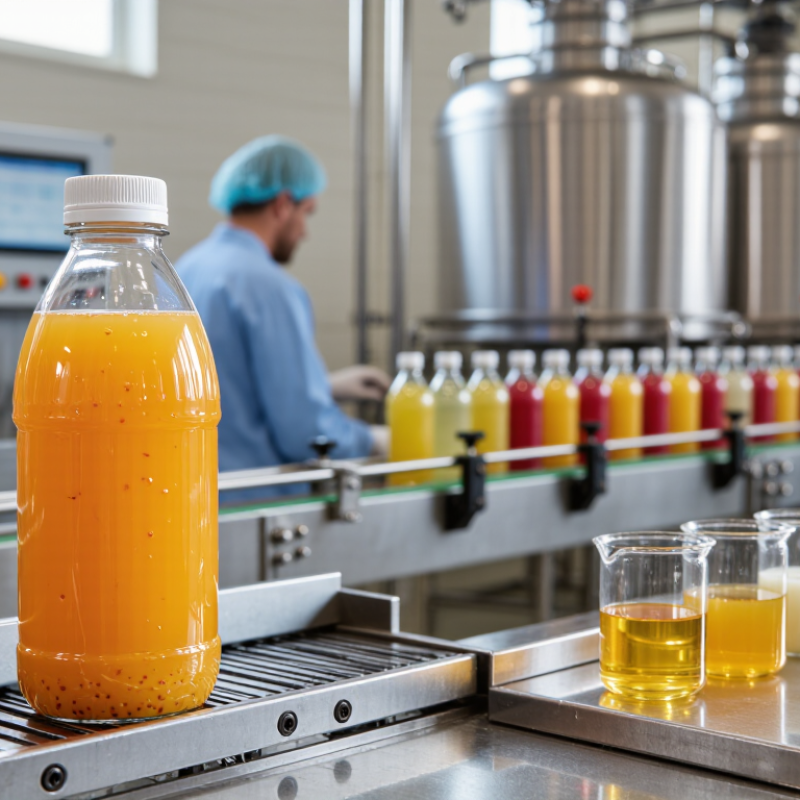
Why Are Beverage Processing Ingredients Important?

What Are Beverage Processing Ingredients?

Beverage processing ingredients are substances used to help make drinks consistently, safely, and appealingly during production. They may support texture, flavor, color, acidity, or shelf stability. Examples include pectin for a fuller mouthfeel, citric acid for tartness, and pH-sensitive enzymes used in some juice processes. Their purpose depends on the beverage and the step where they are added.

A small amount can make a visible difference. In a fruit drink, a stabilizer may slow pulp from settling at the bottom of a clear bottle. Acidity regulators can help keep a drink’s flavor balanced, while processing aids may improve filtration or clarify juice. Some ingredients are removed or reduced before packaging; others remain in the finished drink. The distinction matters.

Choosing an ingredient is not just a matter of selecting a function. Formulators consider the drink’s acidity, heat treatment, packaging, and expected storage conditions. An ingredient that performs well in one recipe may affect another drink’s flavor or appearance. Testing is essential. A bench sample may look smooth, then separate after weeks on a shelf. That can be frustrating, and it is a reminder that ingredient performance depends on the whole process, not just the ingredient itself.

How Do These Ingredients Shape Flavor, Texture, and Appearance?

Beverage ingredients shape the first sip and the impression left behind. Acids can sharpen fruit notes, while sweeteners soften sourness and bitterness. Emulsifiers help oils disperse, so citrus flavor does not gather into an oily ring. Hydrocolloids can add body, but too much may make a drink feel sticky. Small changes matter. In the 2024 International Food Information Council Food & Health Survey, 85% of U.S. respondents named taste as a factor in food and beverage purchases. That finding reflects consumer responses, not a guarantee that one formula will please everyone.

Texture and appearance also influence expectations before tasting. Pulp can signal a fuller juice, while fine bubbles make a drink seem lighter and more lively. Clouding agents help create an even, juice-like look; colors can reinforce familiar fruit cues. But appearance is not a shortcut to quality. A clear drink is not automatically better: removing haze may also remove cues people associate with fresh fruit. Ingredients must work together through processing and storage, not just in a fresh sample. Heat or time can dull color, mute aroma, or change thickness. Formulators often need sensory testing across batches, because a technically stable beverage can still feel oddly slick or flat. That trade-off deserves attention.

How Do They Support Beverage Safety and Shelf Life?

Beverage processing ingredients help control conditions that can affect microbial growth and product quality. Acidity regulators, for example, can bring a drink to a target pH when used in a validated formulation. That matters in fruit beverages, where acidity may vary between batches. Small shifts matter. A pH reading is useful, but it does not prove a product is safe by itself.

Preservatives can inhibit certain yeasts, molds, or bacteria, depending on the drink and the ingredient used. Antioxidants can slow flavor and color changes caused by oxygen. Stabilizers may keep pulp evenly dispersed, rather than letting it settle into a dense layer at the bottom of a bottle. These ingredients support shelf life, but they work alongside heat treatment, clean equipment, sealed packaging, and suitable storage. They are not substitutes for those controls.

Reliable results come from testing the actual beverage, not guessing from a recipe. A processor should check pH, filling conditions, packaging integrity, and product quality over time. This is especially important when changing a supplier, package size, or formulation. No ingredient can rescue a poorly cleaned line; that is easy to forget when a formulation looks sound on paper. Shelf-life claims should reflect documented testing under realistic storage conditions, including the temperatures consumers may actually encounter.

What Roles Do They Play in Nutrition and Product Formulation?

Beverage processing ingredients help turn a nutrition goal into a drink people can actually enjoy and use consistently. Vitamins, minerals, protein, and dietary fiber can add nutritional value, but they also affect taste, color, and texture. Added minerals may leave a bitter or metallic note. Protein can make a drink feel thicker, while fiber may alter its smoothness. Small amounts matter.

Formulation ingredients also help control how a beverage behaves during processing and storage. Acids adjust tartness and pH; emulsifiers help disperse oil-based components, and stabilizers can slow settling in drinks containing pulp or protein. Sweeteners and flavorings can balance sharp or bitter notes, though they do not erase every off-flavor. Texture matters too. A drink that separates in the bottle may still be safe, but consumers can mistake separation for a quality problem.

Choosing ingredients involves trade-offs. Heat, oxygen, acidity, and light can reduce the stability of some nutrients, so formulators need to consider processing conditions and packaging alongside the recipe. Not always easy. More fortification is not automatically better if it makes the beverage unpleasant or unstable. Small-scale trials, shelf-life checks, and sensory testing help reveal these issues before production, although results can vary between formulations.

Why Are Beverage Processing Ingredients Important? — Roles in Nutrition and Product Formulation
Ingredient category Examples Role in product formulation Potential nutrition contribution Formulation considerations
Sweeteners Sugar, glucose syrup, stevia-derived sweeteners, sucralose Provide sweetness and help balance sour, bitter, or astringent flavors. Sugars can also contribute body and affect texture. Sugars provide carbohydrate and energy. High-intensity sweeteners can provide sweetness with little or no energy, depending on the ingredient and amount used. Sweetness intensity, aftertaste, solubility, labeling rules, and the desired sugar or energy level all influence selection.
Acidity regulators Citric acid, malic acid, phosphoric acid, sodium citrate Adjust tartness and pH, support flavor balance, and help create a consistent taste profile. pH can also affect product stability and preservation requirements. These ingredients are generally used for technological and sensory purposes rather than as significant sources of nutrients. The appropriate type and amount depend on the beverage, target flavor, processing method, and food-safety controls.
Stabilizers and thickeners Pectin, xanthan gum, gellan gum, carboxymethyl cellulose Help control viscosity, suspend particles, reduce separation, or improve mouthfeel in suitable beverage systems. Some hydrocolloids are dietary fibers, but their nutritional contribution depends on the specific substance and quantity used. Performance depends on pH, mineral content, temperature, processing conditions, and interactions with other ingredients.
Emulsifiers Lecithin, gum arabic, sucrose esters Help disperse oil-based flavorings or other hydrophobic components in water-based beverages and maintain a more uniform mixture. Some emulsifiers, such as lecithin, may contribute small amounts of nutrients; their primary beverage role is usually functional. Choice depends on the oil phase, beverage acidity, processing method, and desired shelf stability.
Preservatives Potassium sorbate, sodium benzoate When permitted and used appropriately, help inhibit the growth of certain yeasts, molds, or bacteria and support product shelf life. Preservatives are used for product protection, not as meaningful sources of nutrition. Effectiveness depends on factors such as pH, formulation, packaging, and processing. Use must comply with applicable regulations and limits.
Vitamins and minerals Vitamin C, selected B vitamins, calcium, iron Support the formulation of fortified beverages and help achieve a defined nutrient profile. Can provide specific micronutrients when present in sufficient amounts; the contribution varies by nutrient, serving size, and product formulation. Some nutrients can be sensitive to heat, light, oxygen, or pH. Stability, bioavailability, and permitted claims require consideration.
Protein ingredients Whey protein, casein, soy protein, pea protein Add protein and can contribute body, opacity, and texture. They are commonly used in protein-focused beverages. Provide protein, with the amount and amino-acid profile depending on the source and formulation. Solubility, heat stability, flavor, sedimentation, and compatibility with acidity are important. Some proteins may cause allergens to be present.
Dietary fibers Inulin, resistant dextrin, soluble corn fiber Can add soluble solids and affect body or mouthfeel; some fibers may also be used to increase the beverage’s fiber content. Contribute dietary fiber when the ingredient and amount qualify under applicable nutrition-labeling rules. Solubility, clarity, viscosity, tolerance, and local labeling definitions should be checked during formulation.
Natural and nature-identical flavors Fruit, herb, spice, and other permitted flavor preparations Provide or reinforce aroma and taste, helping shape the beverage’s sensory character. Usually used in small quantities and generally do not make a meaningful contribution to nutrients. Flavor stability, interaction with acidity and sweeteners, processing conditions, and ingredient-labeling requirements can affect selection.
Coloring ingredients Permitted plant-derived colors and other approved color additives Provide or standardize appearance and help maintain a consistent visual profile. Typically selected for appearance rather than nutritional value. Color stability may be affected by light, heat, oxygen, pH, and the presence of minerals or other ingredients. Permitted uses vary by jurisdiction.
Ingredient functions and nutrition contributions vary by beverage type, amount used, processing conditions, and local regulations. A formulation’s nutrition claims should be based on the finished product and applicable labeling requirements.

How Do They Improve Processing Efficiency and Product Consistency?

Beverage processing ingredients help control what happens between mixing and filling. Enzymes can break down pectin in fruit drinks, making juice easier to clarify and filter. Stabilizers help keep cocoa or plant-based drinks from separating during storage. Acidity regulators can support a consistent taste and processing environment. These ingredients may reduce filter blockages, uneven texture, and batch-to-batch variation. Small changes matter: a slight shift in viscosity can affect pump speed and filling accuracy.

Consistency depends on more than the ingredient itself. Dosage, temperature, mixing time, and the order of addition all influence performance. For example, adding a stabilizer too quickly can create clumps that take longer to disperse. A pilot batch helps teams check texture, clarity, and flow before adjusting a full production run. Still, extra ingredients do not automatically improve efficiency. Sometimes a simpler formula works better, and that is worth checking.

Tips: Record ingredient quantities and process settings for each trial. Compare samples after mixing and during storage, not just at the filling line. If results vary, review water quality and mixing conditions before changing the formula.

Why Beverage Processing Ingredients Matter

Common ingredient functions can support efficient processing and help maintain product consistency or stability.

This chart is a qualitative mapping of common ingredient functions: 1 means the function is commonly relevant; 0 means it is not a primary function. It does not represent measured savings or guarantee an outcome. Effects vary by formulation and process.

FAQS

What are beverage processing ingredients?

They help manage texture, flavor, color, acidity, or shelf stability. Pectin can add body. Citric acid can add tartness.

Can a small amount change a drink’s appearance?

Yes. A stabilizer may keep fruit pulp from settling in a clear bottle. Small changes matter.

Do all processing ingredients remain in the finished drink?

No. Some are removed or reduced during production; others remain. The difference matters.

How can acidity regulators support beverage quality?

They can help bring a drink to a target pH in a validated formulation. Fruit acidity can vary between batches. A reading alone proves little.

How do preservatives and antioxidants help?

Preservatives can inhibit certain microbes, while antioxidants can slow flavor and color changes from oxygen. Their effects depend on the drink.

Can ingredients replace heat treatment or clean equipment?

No. Ingredients work alongside heat treatment, clean equipment, sealed packaging, and suitable storage. Not a substitute.

Why should a formulation be tested over time?

A drink may look smooth in a small sample, then separate after weeks on a shelf. Annoying, but informative.

What should be checked when a formulation changes?

Check pH, filling conditions, package integrity, and product quality over time. Test under realistic storage temperatures, too. Guessing is not enough.

Conclusion

Beverage Processing Ingredients are the functional components that help transform a basic drink into a consistent, appealing product. Depending on the recipe, they can balance sweetness and acidity, enhance or preserve flavor, create a smooth or refreshing texture, and improve color and clarity. Their effects help shape how a beverage looks, tastes, and feels from the first sip to the last.

These ingredients can also support product safety and extend shelf life by helping maintain quality during processing and storage. They give formulators ways to adjust nutritional profiles, meet different consumer preferences, and achieve desired product characteristics. In manufacturing, suitable ingredients can make processing more efficient, reduce variation between batches, and help ensure that beverages remain consistent in flavor, appearance, and performance over time.

Sophia

Sophia

Sophia is a dedicated marketing professional with a profound understanding of her company's products and services. With years of experience in the industry, she consistently demonstrates expertise in crafting strategic marketing initiatives that resonate with target audiences. Sophia takes pride in......