
Food Ingredient Insights & News
Explore technical formulation guides, market trends, and industry articles curated by NCC Food Ingredients specialists.
Yeast Protein Ingredients are gaining attention among global buyers seeking practical, sustainable protein options. They can support food, feed, and specialized nutrition applications. However, choosing the right ingredient requires more than comparing protein percentages. Origin, processing method, taste, solubility, documentation, and supply consistency can change the final result.
This guide examines seven leading yeast protein ingredients from a buyer’s perspective. It considers nutritional value, application suitability, technical performance, and sourcing reliability. A good ingredient should provide clear specifications, traceable production, and testing for microbiological and chemical safety. Buyers should also review amino acid data, moisture levels, particle size, shelf life, and packaging conditions. A 25-kilogram bag may look efficient, but poor moisture control can affect its flow and storage stability.
Details matter.
Supplier experience is equally important. Reliable manufacturers can explain fermentation conditions, downstream processing, batch variation, and quality-control procedures. They should provide current certificates and respond clearly to technical questions. Still, no ingredient is perfect. Some yeast proteins may carry noticeable flavor, while others may require formulation adjustments for texture or dispersion. These limitations deserve honest evaluation, not polished promises.
The following overview helps importers, manufacturers, and distributors compare seven yeast-based protein choices. It also highlights where each option may perform best, from savory foods and beverages to animal nutrition. Regional regulations and customer expectations should always be checked before commercial use. A practical trial remains essential. Lab data can guide decisions, but real-world formulation often reveals the truth.
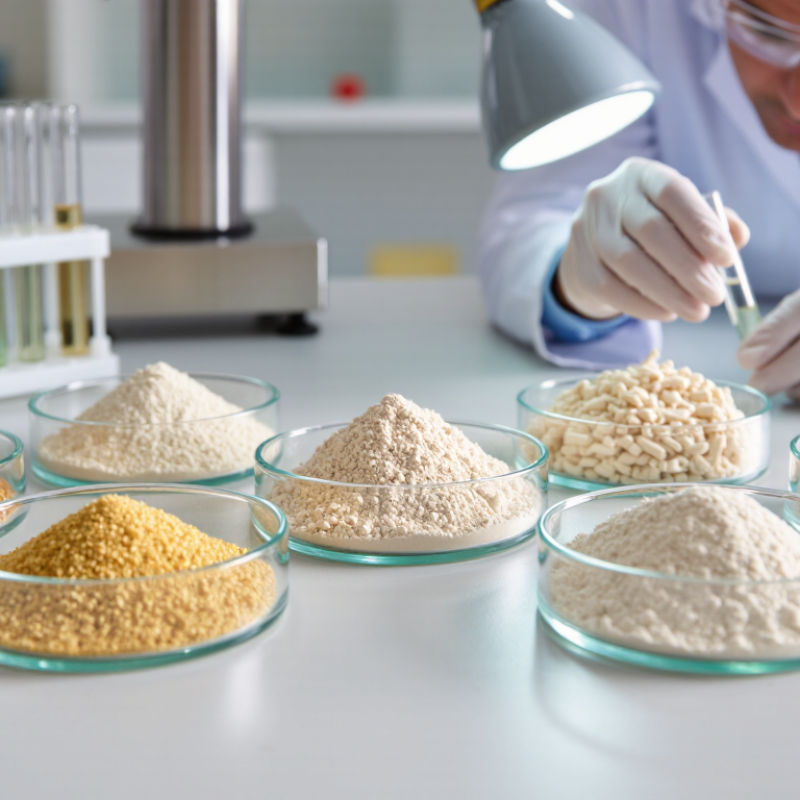
Market Scope: Yeast Protein Demand and Global Supply Trends
7 Best Yeast Protein Ingredients for Global Buyers?
Market Scope: Yeast Protein Demand and Global Supply Trends
Global buyers are paying closer attention to yeast protein as plant-based food demand expands. The market is moving beyond basic nutrition claims. Purchasers now compare amino acid profiles, digestibility, taste, solubility, and carbon intensity. Demand is visible in meat alternatives, sports nutrition, bakery mixes, and clinical-style foods. Asia-Pacific shows strong manufacturing growth, while Europe values traceability and lower-impact processing. North American buyers often seek flexible formats and dependable contract volumes. Forecasts remain useful, but they are not perfect. Local regulations and consumer preferences can change quickly.
A practical shortlist includes inactive yeast biomass and yeast protein concentrate. Yeast protein isolate offers higher protein density, but usually costs more. Hydrolyzed yeast protein can improve dispersion and savory flavor. Autolyzed yeast supports flavor systems, while nutritional yeast suits dry blends. Protein-rich cell fractions may fit specialized formulations. The best choice depends on application, not label appeal. A beverage needs clean solubility. A baked product may tolerate stronger notes. Buyers should test seven ingredients under real processing conditions. Small pilot batches reveal issues that laboratory sheets miss.
Supply is shaped by fermentation capacity, feedstock availability, drying energy, and port reliability. Regional production can shorten transit, yet it may reduce supplier diversity. Experienced procurement teams request certificates of analysis, allergen statements, microbial results, and full traceability. They also verify protein methods, moisture limits, batch consistency, and storage stability. I would question any forecast promising uninterrupted growth. Weather, energy prices, and factory maintenance still create delays. A reliable supplier communicates problems early and provides realistic lead times. That behavior matters more than polished sales language.
Comparative guide for international buyers covering typical protein levels, product formats, applications, sourcing characteristics, and demand trends.
| Rank | Yeast Protein Ingredient | Typical Protein Content (% dry basis) |
Main Biological Source | Primary Applications | Key Technical Advantages | Common Buyer Considerations | Global Demand Trend | Typical Supply Base |
|---|---|---|---|---|---|---|---|---|
| 1 | Yeast Protein Concentrate | 60–75% | Food-grade Saccharomyces cerevisiae or other cultivated yeasts | Plant-based foods, protein blends, nutrition powders, bakery and savory formulations | High protein density, relatively low fat, useful amino-acid profile and good compatibility with dry blends | Verify digestibility, nucleic-acid level, flavor profile, particle size and allergen-control documentation | High and expanding Supported by demand for non-soy, non-dairy and fermentation-derived proteins |
Europe, North America, East Asia and selected Latin American fermentation hubs |
| 2 | Yeast Protein Isolate | 70–85% | Purified protein fractions from food-grade yeast biomass | High-protein beverages, sports nutrition, medical and specialized nutrition products | Highest protein concentration among common yeast formats; suitable for premium formulations | Higher processing cost; assess solubility, heat stability, sensory neutrality and minimum order quantity | Emerging premium segment Demand is linked to clean-label and precision-fermentation interest |
Specialized fermentation and downstream-processing facilities in Europe, Asia and North America |
| 3 | Yeast Protein Hydrolysate | 50–65% | Enzymatically hydrolyzed yeast biomass or yeast protein concentrate | Sports nutrition, functional beverages, clinical nutrition, animal feed and aquafeed | Shorter peptides, improved dispersibility and potential formulation advantages over intact yeast protein | Control bitterness, degree of hydrolysis, peptide distribution, odor and hygroscopicity | Fast-growing niche Benefits from demand for digestible and functional peptide ingredients |
Europe, China, Japan, South Korea and North America |
| 4 | Food-Grade Torula Yeast Powder | 50–60% | Cyberlindnera jadinii (formerly classified as Candida utilis) | Savory foods, meat alternatives, soups, sauces, snacks and protein-enriched foods | Strong savory character, high protein content and good suitability for flavor-enhancing formulations | Flavor intensity, color, nucleic-acid content, microbial specifications and regional regulatory status | Stable to growing Demand follows growth in savory plant-based foods and natural flavor systems |
Europe, China, Japan, Southeast Asia and other regions with industrial yeast fermentation |
| 5 | Inactive Nutritional Yeast | 45–55% | Inactive dried Saccharomyces cerevisiae biomass | Seasoning blends, vegan foods, bakery mixes, snacks, sauces and dietary supplements | Plant-based positioning, naturally savory taste and broad dry-blend compatibility | Check fortification status, vitamin levels, flavor consistency, moisture, flowability and country-specific labeling rules | Broad mainstream demand Supported by vegan, vegetarian and flexitarian consumption |
North America, Europe, Australia, China and other established baking or fermentation markets |
| 6 | Brewer’s Yeast Protein Powder | 45–55% | Inactivated yeast biomass associated with brewing or fermentation processes | Animal feed, aquafeed, pet nutrition, supplements and selected human-food applications | Potentially attractive by-product economics and naturally occurring B vitamins and minerals | Bitterness, residual hop compounds, heavy metals, nucleic acids, microbiological safety and batch consistency | Steady, application-dependent Strongest opportunities are in feed, pet nutrition and circular-economy ingredients |
Europe, North America, Australia, China and major beer-producing regions |
| 7 | Autolyzed Yeast Powder | 45–55% | Self-digested yeast cells processed to release soluble proteins, peptides and cell components | Seasonings, soups, sauces, processed foods, feed additives and fermentation media | High savory intensity, soluble nitrogen compounds and multifunctional flavor contribution | Differentiate protein contribution from total nitrogen; review salt content, free amino nitrogen, flavor strength and solubility | Stable industrial demand Growth is linked to savory flavor systems and efficient fermentation nutrients |
Europe, North America, China, Japan and other mature fermentation markets |
FAQS
Compare inactive dry yeast, yeast protein concentrate, yeast biomass flour, hydrolysate, autolyzed yeast, cell-wall fractions, and nutritional yeast flakes. Each behaves differently in food. Their value depends on the final recipe, not protein percentage alone.
Yeast protein concentrate often exceeds 60% protein on a dry basis. It may cost more and need careful flavor testing. High numbers can mislead.
Choose an ingredient with tested cold-water dispersibility and low sedimentation. Review results at different pH levels, temperatures, and mixing times. Check the drink after ten minutes, not immediately.
Request amino acid data, digestibility results, and the reported protein-testing method. PDCAAS helps compare quality, while DIAAS may show limitations more precisely. Scores may be rounded.
Ask for recent certificates of analysis, allergen statements, microbial results, heavy-metal data, and full traceability. Also review moisture, ash, nucleic acids, particle size, and storage stability. Missing data matters.
Compare at least three production lots before approving regular supply. Run small pilot batches under real processing conditions. One excellent sample proves little.
Hydrolyzed yeast can improve dispersion and savory flavor. Autolyzed yeast supports flavor systems more than maximum protein density. Nutritional yeast flakes fit dry blends but may taste strong. Cell-wall fractions provide more beta-glucans than protein.
Review fermentation capacity, feedstock availability, drying energy, factory maintenance, and port reliability. Regional production may shorten transit but reduce supplier diversity. Forecasts are not guarantees. A supplier that reports delays early is more dependable.
Conclusion
This guide evaluates seven leading Yeast Protein Ingredients for global buyers seeking reliable, nutritious, and scalable alternatives to conventional protein sources. It examines worldwide demand and supply trends, then compares ingredients using practical criteria such as protein content, PDCAAS, purity, amino acid profile, digestibility, and solubility. USDA references and supplier specifications are used as structured benchmarks, helping buyers understand performance differences across food, beverage, supplement, and functional nutrition applications.
The article also highlights global compliance considerations, including Codex principles, FDA requirements, EU Novel Food expectations, and Halal certification needs. A practical buyer scorecard brings the evaluation together by considering price competitiveness, production capacity, certification coverage, documentation quality, logistics, and supply-risk exposure. By applying these criteria consistently, procurement teams can identify yeast protein options that balance nutritional value, technical performance, regulatory readiness, and long-term supply reliability without depending solely on marketing claims.